 Sold out
Explore LED bathroom mirrors in round, arch, pill, oval, rectangular and shaped designs, with framed and frameless options at Melbourne Bathroom Shop.
Compare front-lit and backlit styles, actual dimensions and controls. Colour-temperature settings, dimming, demisters and installation requirements vary by product, so check the selected mirror's specifications before ordering.

SKU: 156180700
4 sizes available$450
$0 (-0%) OFF
RRP of $450

SKU: 452314620
3 sizes available$387
$0 (-0%) OFF
RRP of $387

SKU: 338119855
Choose Color
$610
$0 (-0%) OFF
RRP of $610

SKU: 854168950
2 sizes available$387
$0 (-0%) OFF
RRP of $387

SKU: 014816015
Choose Color
$555
$0 (-0%) OFF
RRP of $555

SKU: 683725940
Choose Color
$729
$0 (-0%) OFF
RRP of $729
SKU: 233921600
Choose Color
$979
$0 (-0%) OFF
RRP of $979

SKU: 372640985
Choose Color
$519
$0 (-0%) OFF
RRP of $519

SKU: 458972310
Choose Color
$539
$0 (-0%) OFF
RRP of $539

SKU: 836597616
Choose Color
$532
$0 (-0%) OFF
RRP of $532

SKU: 875430303
Choose Color
$305
$0 (-0%) OFF
RRP of $305

SKU: 370419876
$431
$0 (-0%) OFF
RRP of $431

SKU: 099158748
Choose Color
$420
$0 (-0%) OFF
RRP of $420

SKU: 165846344
Choose Color
$519
$0 (-0%) OFF
RRP of $519

SKU: 937315185
3 sizes available$443
$0 (-0%) OFF
RRP of $443

SKU: 982007670
3 sizes available$387
$0 (-0%) OFF
RRP of $387

SKU: 863151054
4 sizes available$335
$0 (-0%) OFF
RRP of $335

SKU: 994426285
3 sizes available$405
$71 (-15%) OFF
RRP of $476

SKU: 486190742
12 sizes available$512
$0 (-0%) OFF
RRP of $512

SKU: 811535224
Choose Color
$650
$0 (-0%) OFF
RRP of $650

SKU: 524941024
2 sizes available$387
$0 (-0%) OFF
RRP of $387
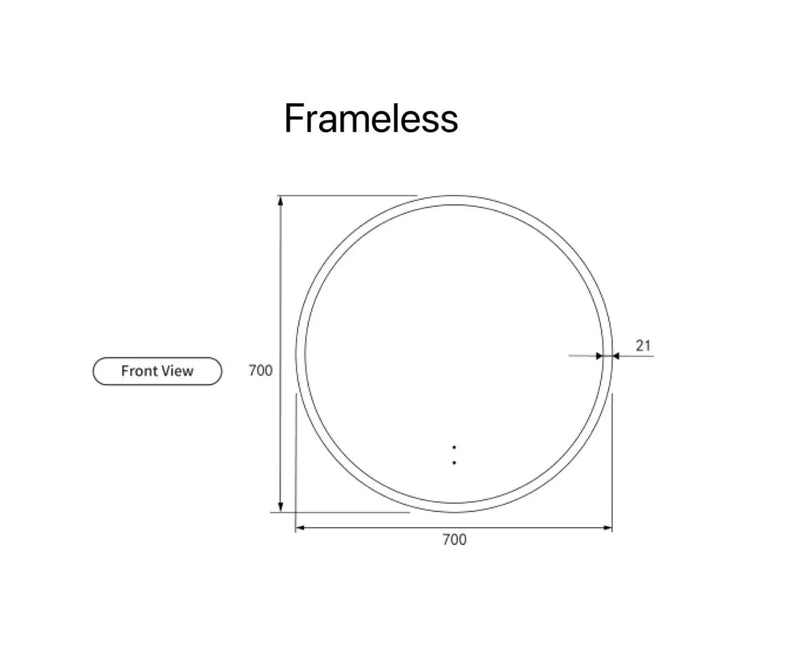
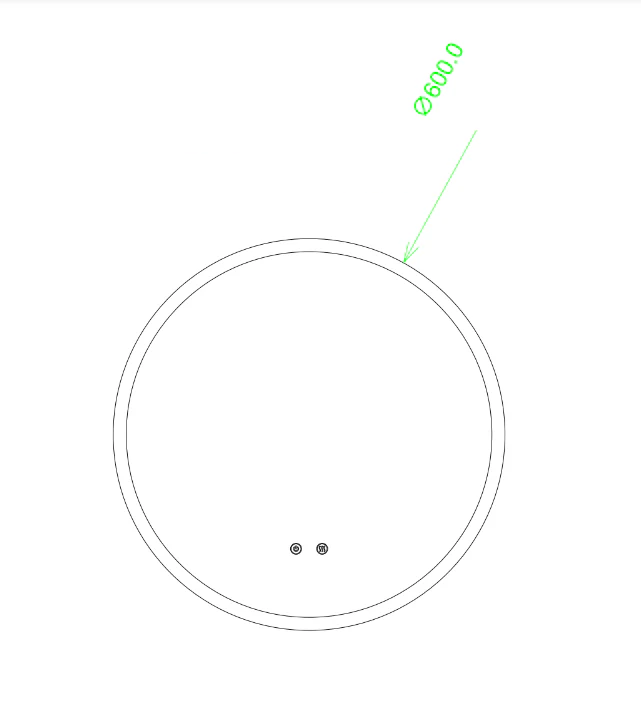
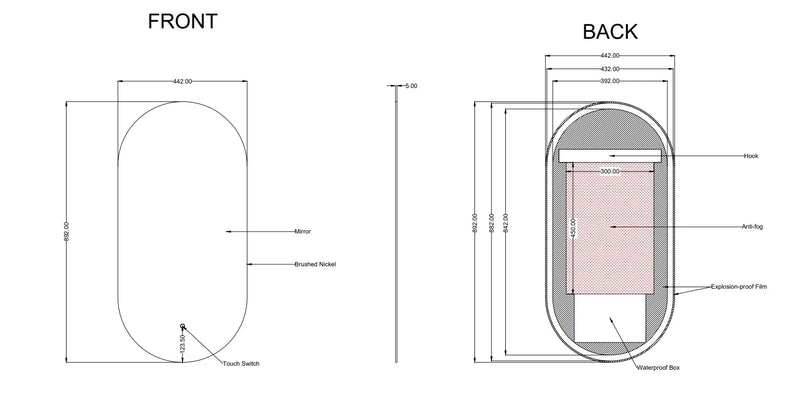
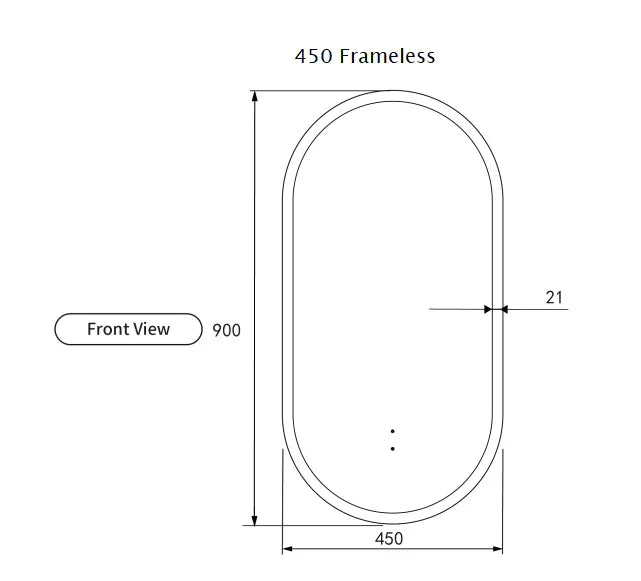
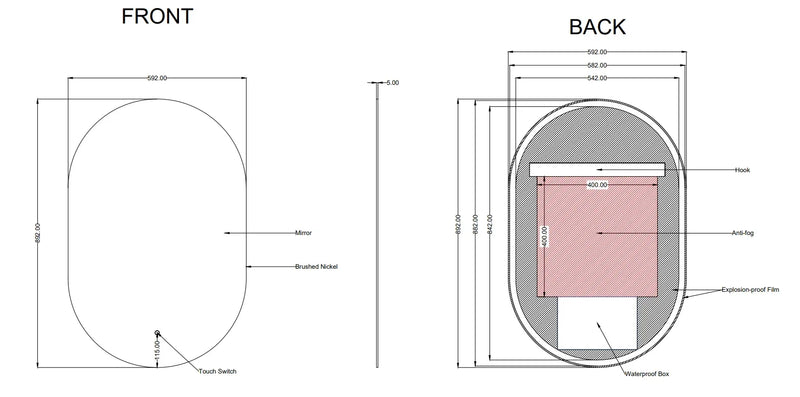
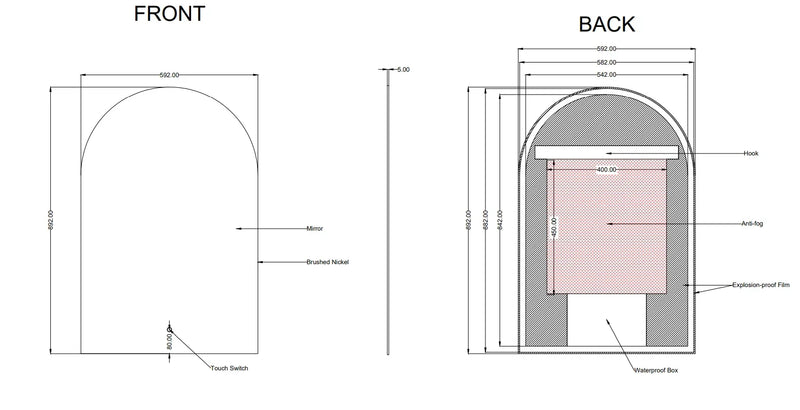
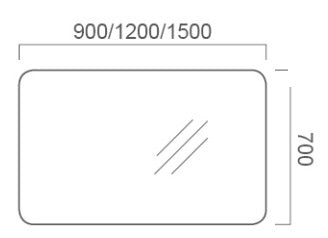
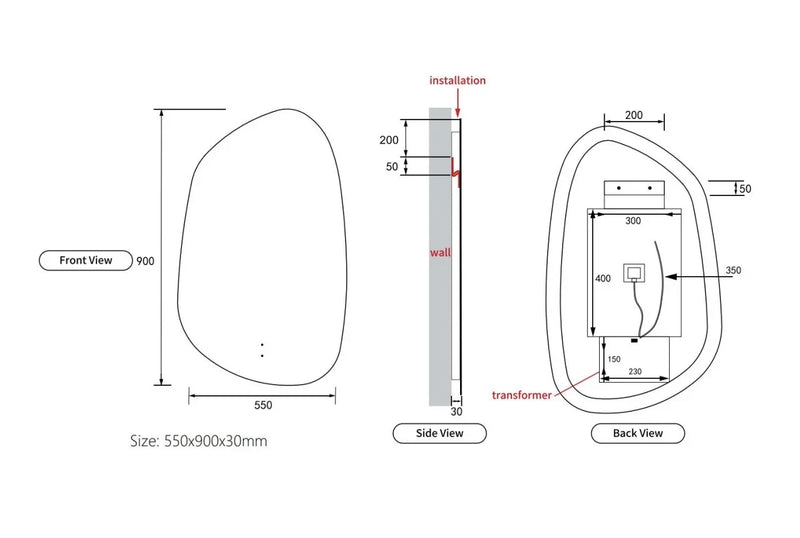
For round mirrors, the size normally refers to the diameter. For rectangular, arch, pill, oval and shaped mirrors, check the full width and height, including any frame. Confirm the selected option and dimension drawing rather than treating a single size in the title as the complete footprint.
Measure the wall space above your vanity and allow clearance from tapware, wall lights, nearby cabinets and the ceiling. Check mirror depth, mounting brackets and rear space needed for the electrical connection. Portrait or landscape mounting is product-specific; do not assume every design can be rotated.
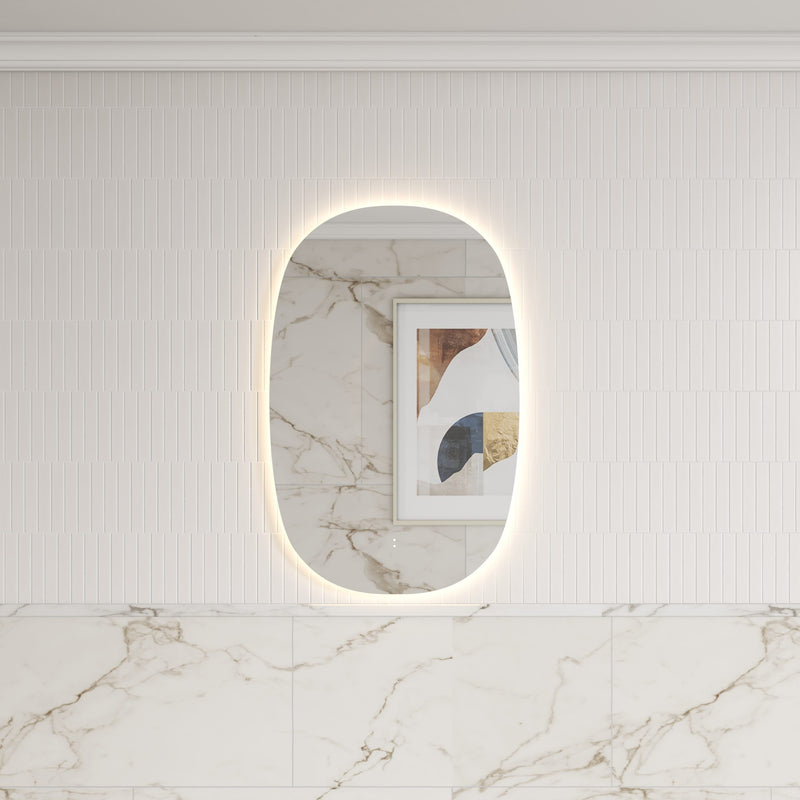
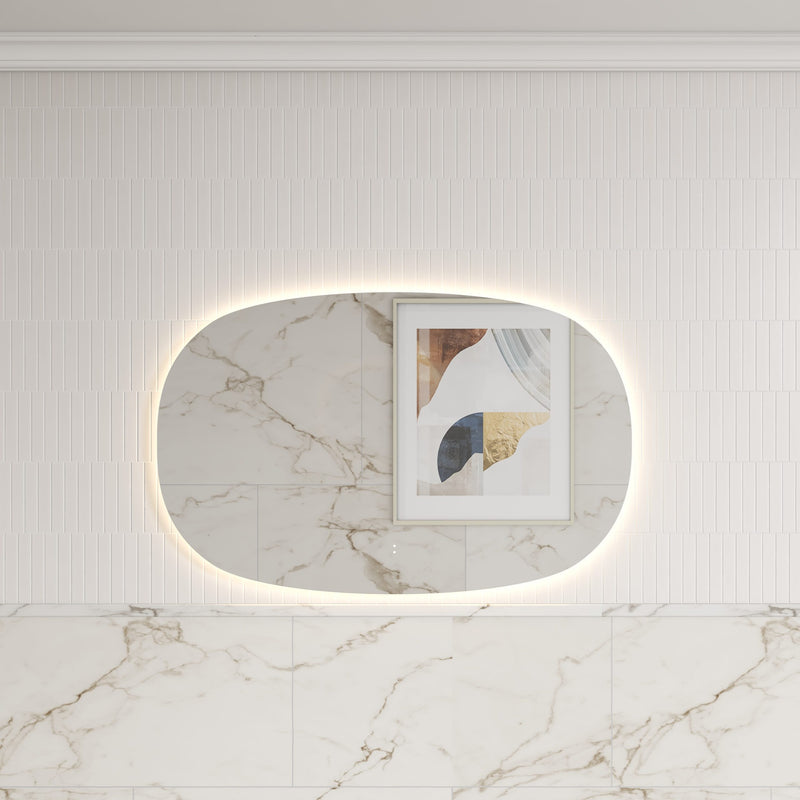
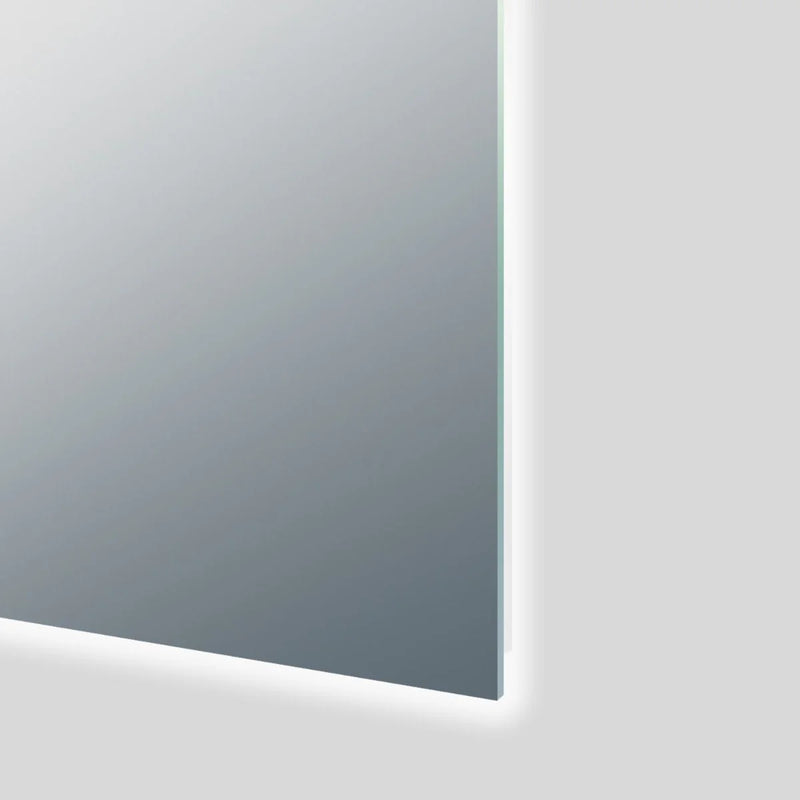
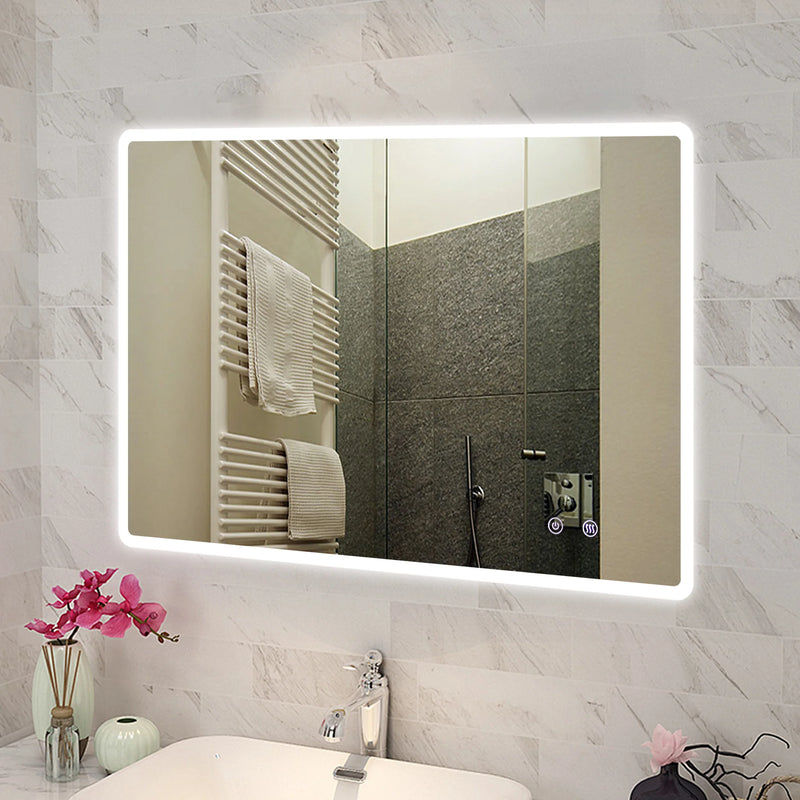
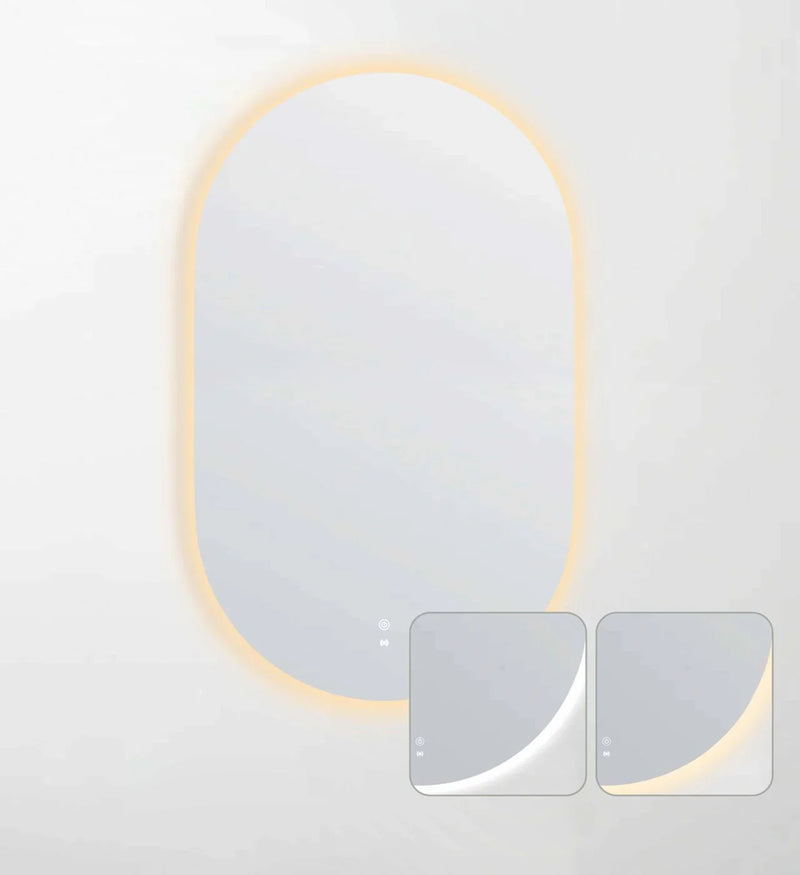
Front-lit mirrors direct light towards the user, while backlit designs create a glow on the wall around the mirror. Compare the actual light arrangement with your existing ceiling and vanity lighting. Integrated mirror lighting does not guarantee enough illumination for every grooming task or for the whole bathroom.
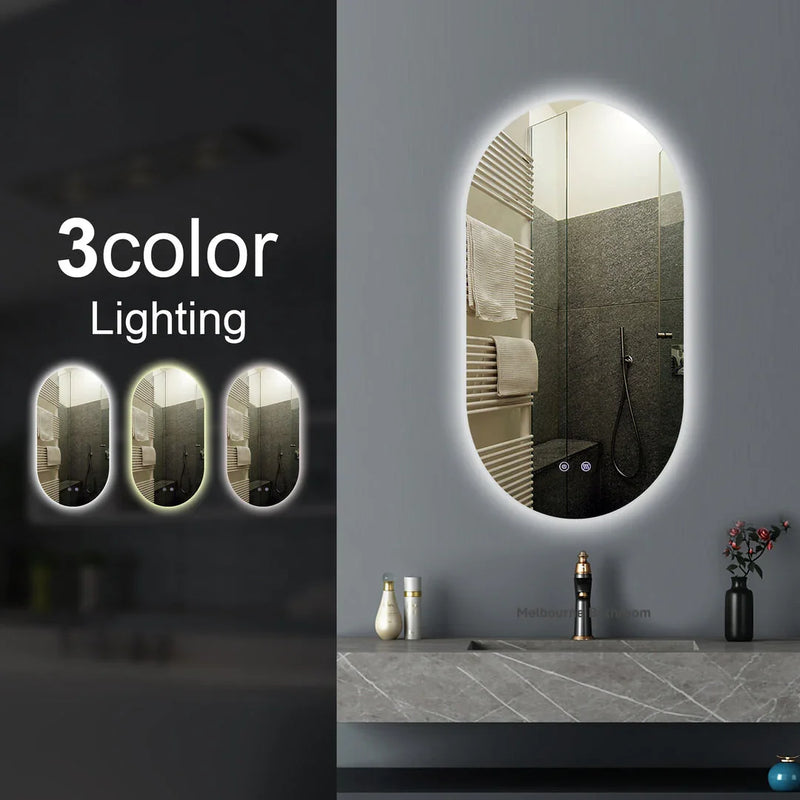
Selected mirrors offer 3000K warm, 4000K neutral and 6000K cool colour settings; other listings specify a single colour temperature. Changing the light colour is different from dimming its brightness. Check both functions separately, along with any memory setting, before ordering.
Use the controls described for the selected mirror. Do not assume that an adjustable-colour mirror is dimmable or that it supports external dimmers, smart switches or other control systems. Confirm compatibility with the supplier if external controls are planned.
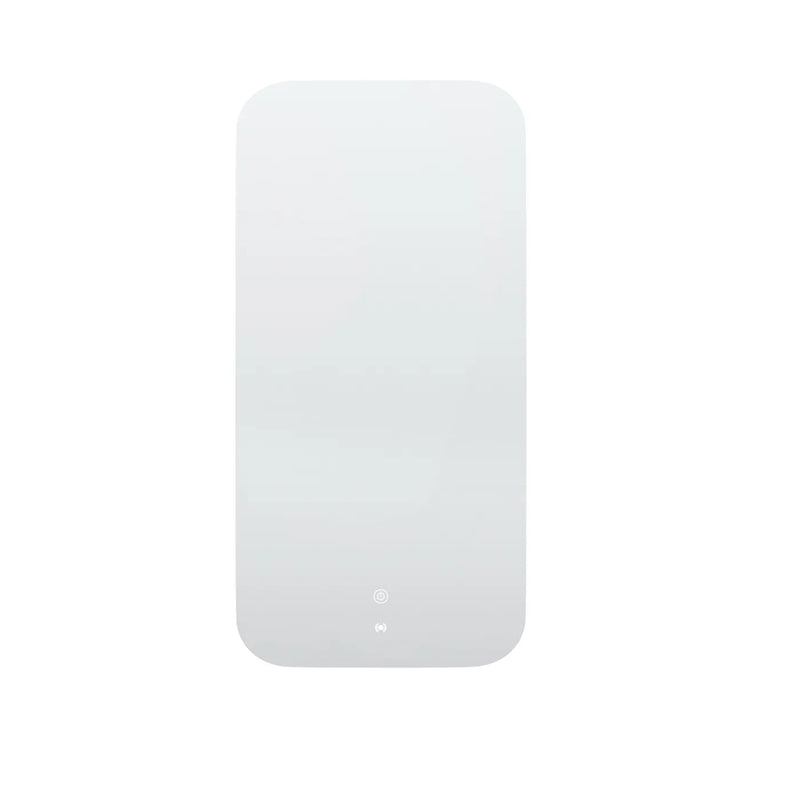
A touch control requires contact with the mirror switch. Touch-free and motion-sensor controls operate differently between products, so check whether the mirror responds to a hand gesture or movement nearby. Confirm how to turn the light on and off, adjust settings and use any automatic shut-off function.
Allow the sensor clearance specified by the manufacturer. Where other sensor-operated fixtures are nearby, check placement and possible interference before installation.
A demister pad helps reduce condensation over the heated area of the mirror. It should not be assumed to clear the entire mirror or replace bathroom ventilation. Confirm that the selected mirror includes this feature and whether it operates with the light, through a separate touch control or automatically.
Check the specified wall brackets or other fixings, permitted orientation, connection position and mirror weight. Confirm which brackets, fittings and power accessories are included and which your installer must supply.
Connection requirements vary: some listings specify a plug, while others allow or require a different connection. Check the installation instructions for the selected product and arrange a qualified electrician where required. Confirm the actual product rating and suitable installation location rather than assuming one rating applies to the whole collection.
Bring your vanity measurements and wall photos to Melbourne Bathroom Shop in Blackburn to compare suitable designs. For a mirror without integrated lighting, browse Bathroom Mirrors; for storage, compare Mirrored Shaving Cabinets or LED Mirror Cabinets.
Coordinate your mirror with Bathroom Vanities, then confirm the selected option, availability and pickup or delivery arrangements before ordering.
Find more answers at support.melbournebathroom.com.au
Start with the width of your vanity and the available wall space above it. The LED mirror does not need to be exactly the same width as the vanity, but the proportions should feel balanced. A wide rectangular or oval mirror can work well above a larger vanity, while round, arch and pill-shaped mirrors are popular for single-basin vanities. Also check the available height and clearance from tapware, power points, wall lights and shaving cabinets. The current Melbourne Bathroom Shop range includes compact mirrors through to larger 1200mm, 1500mm and 1800mm options.
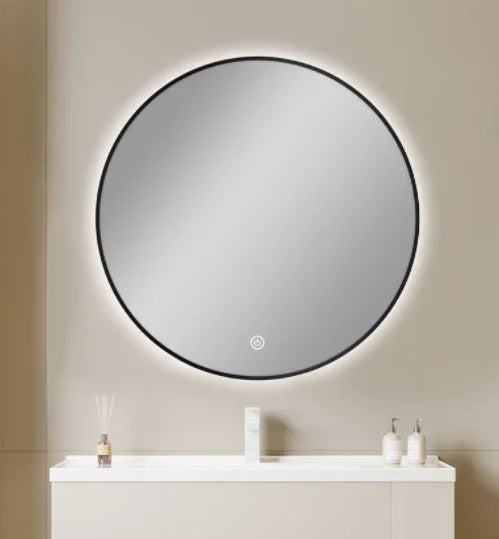
A front-lit LED mirror directs more light towards your face, which can be useful for grooming, shaving and makeup. A backlit mirror produces more of a glow around the outside of the mirror, helping create softer ambient lighting and a floating appearance against the wall. Melbourne Bathroom Shop currently carries both front-lit and backlit designs. Neither option is automatically better; consider how much ceiling or vanity lighting is already in the bathroom and whether your priority is practical facial lighting or a softer decorative effect.
Colour temperature affects how warm or cool the bathroom lighting appears. Around 3000K produces a warmer, softer light, while 4000K provides a more neutral appearance that suits everyday bathroom use. Around 6000K creates a cooler, brighter-looking light. Selected LED mirrors in the current range offer multiple colour temperatures, including 3000K, 4000K and 6000K, allowing you to change the lighting depending on the time of day or task. Check the individual product specifications because lighting functions vary between models.
A demister can be useful if the mirror is installed in a bathroom that regularly becomes steamy after showers. It heats a selected area behind the mirror to help reduce condensation, meaning part of the mirror can clear more quickly instead of needing to be wiped manually. Many LED mirrors in the current Melbourne Bathroom Shop range include a demister, but it is not a feature of every model. If this feature is important to you, confirm that the specific mirror includes a demister rather than assuming all LED mirrors have one.
A touch-switch mirror is operated by touching the control on the mirror surface, while a touchless model uses a sensor so the light can be controlled without touching the glass. Touchless operation can be convenient when your hands are wet and may reduce fingerprints around the switch area. The current range includes both touch-on and touchless models, depending on the design. Choose according to personal preference, but also check whether the model includes dimming, colour-temperature adjustment, memory or demister controls, as these functions are not identical across every mirror.
Choose an LED mirror if you want integrated lighting without adding cabinet depth above the vanity. A standard bathroom mirror is a simpler option if the bathroom already has adequate lighting and you do not need additional electrical features. An LED mirror cabinet combines lighting, mirror space and concealed storage, making it useful where toiletries need to be stored above the vanity. Your choice should depend on available wall space, storage requirements, bathroom lighting and budget rather than appearance alone. If storage is limited elsewhere in the bathroom, a mirror cabinet may provide more practical value than a flat LED mirror.
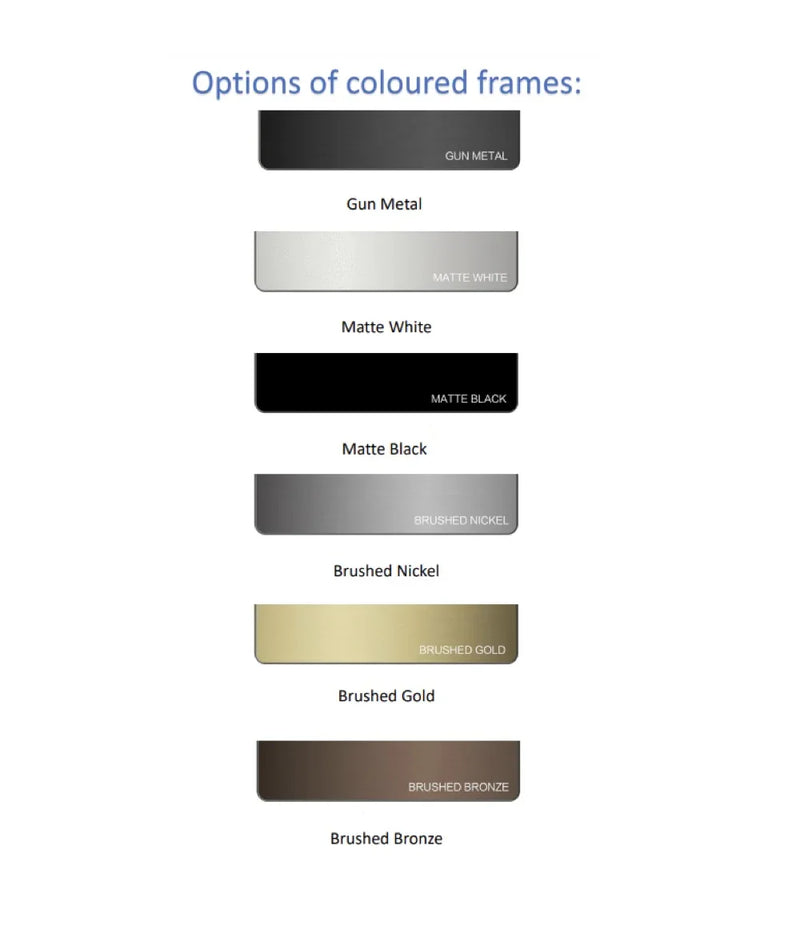
Before ordering, confirm the overall width and height, orientation, frame finish, front-lit or backlit design, colour-temperature options, demister and control type. Also check where the mirror will sit in relation to the vanity, tapware, power points, wall lights and ceiling. Because LED mirrors contain powered electrical components, electrical requirements and connection methods should be checked for the individual model before installation. Features vary considerably across the current range, including frameless and framed designs, touch and touchless controls, demisters and different lighting configurations. Final electrical work should be completed by an appropriately qualified electrician.
Sign up & get $20 off your first order
Thanks for subscribing!
This email has been registered!